ADA Accommodation Letter for Anxiety: What You Need to Know

Anxiety disorders are among the most common reasons employees request workplace accommodations under the Americans with Disabilities Act (ADA), and among the most commonly approved. If you have managed your anxiety while working remotely and now face a return-to-office mandate, a well-written accommodation letter can be the difference between keeping a workable arrangement and being pushed back into an environment that makes your symptoms worse.
This guide covers how anxiety qualifies under the ADA, the accommodations you can ask for, what a strong letter includes (with sample language), how to get one, and what happens after you submit it.
A quick note on scope: this is general information about ADA workplace (Title I) accommodations, not legal or medical advice, and it does not promise that any request will be approved. Accommodation decisions are made by your employer through a back-and-forth the law calls the interactive process, not by your provider.
Does Anxiety Qualify as a Disability Under the ADA?
Yes, in most cases. Anxiety disorders, including generalized anxiety disorder (GAD), social anxiety disorder, panic disorder, and agoraphobia, are recognized as qualifying conditions under the ADA when they substantially limit one or more major life activities. Major life activities include concentrating, thinking, communicating, sleeping, interacting with others, and working. If your anxiety makes any of these significantly harder, you likely meet the standard.
Three points people get wrong:
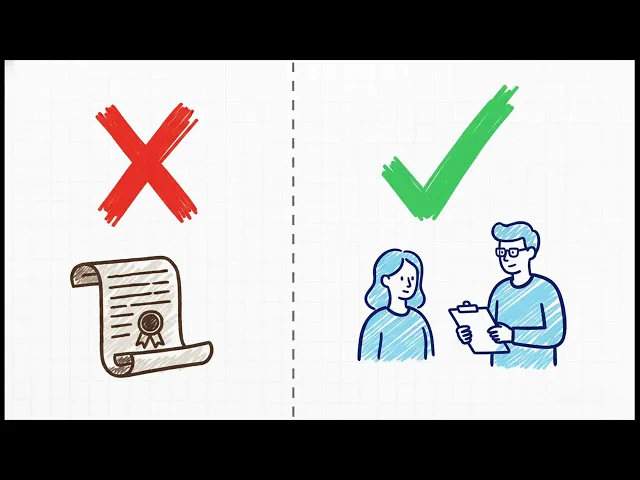
A formal written diagnosis is not the legal test, but the condition still has to be real. You do not need a DSM code on paper to request an accommodation. What the law looks for is a description of your functional limitations. That said, a qualified provider still has to assess that your symptoms reflect a genuine, clinically recognized anxiety disorder, not ordinary job stress, a personality trait, or a hard season at work. A formal diagnosis is not required, but a clinical judgment that you have a real disorder is. We go deeper on this distinction in Do You Need a Diagnosis to Get an ADA Workplace Accommodation?
"Substantially limits" does not mean "completely prevents." You do not have to prove you cannot work in an office at all. You have to show that doing so makes your condition significantly worse, or impairs your functioning in ways a different arrangement would address.
Medication does not disqualify you. The ADA says conditions are evaluated without regard to the mitigating effects of treatment. Even if medication manages your anxiety well, you can still qualify based on the underlying condition.
Who is allowed to make that assessment is broader than most people assume. The EEOC recognizes psychologists, licensed mental health professionals, therapists, nurses, and other qualified providers as appropriate sources of documentation, not only medical doctors. For mental health conditions, a psychologist or licensed mental health professional is usually the strongest choice. See Which Credentials Are Best for an ADA Accommodation Letter? for how to match the provider to the condition.
Reasonable Accommodations for Anxiety at Work (Common Examples)
The ADA does not limit you to a fixed menu. Any change to how, when, or where you work can be a reasonable accommodation if it lets you perform your job and addresses a real functional limitation. The accommodations most commonly requested for anxiety include:
Full-time or partial remote work, to control noise, interruptions, and social demands. See How to Request a Remote Work Accommodation Under the ADA.
A hybrid schedule with predictable in-office days you can plan around. More on this in ADA Accommodation for Hybrid Work.
Flexible start and end times, to avoid peak-commute anxiety or to align with medication timing. See ADA Schedule Accommodations.
A private or semi-private workspace instead of an open floor plan.
Permission to take short breaks as needed to manage acute symptoms.
A reduced meeting load, or attending meetings by video rather than in person.
Written instructions or agendas in advance, to reduce the uncertainty that drives anticipatory anxiety.
Modified or intermittent scheduling during predictable symptom flares.
You can request more than one of these in a single request. The ADA does not cap you at one accommodation. For a walkthrough focused specifically on anxiety, see Reasonable Accommodations for Anxiety at Work.
One honest point: your employer has to provide an effective accommodation, not necessarily the exact one you name. If two options would both address your limitation, the employer can choose between them. The job of your documentation is to make clear why the accommodation you are requesting actually works for your condition.
Is Working From Home a Reasonable Accommodation for Anxiety?
Often, yes. Remote work is one of the most frequently approved accommodations for anxiety because, for many roles, it is low cost and easy to implement while directly reducing the office triggers that drive symptoms: open-plan noise, constant interruptions, forced social contact, and a lack of control over the environment.
It is not automatic. An employer can argue that in-person presence is an essential function of a specific role, or propose an alternative such as a private office or a hybrid schedule. Where full remote work is a hard sell, pairing partial remote work with schedule changes often achieves the same functional result. The more tightly your letter ties remote work to a specific limitation, the harder it is to wave away. For the document side specifically, see A Doctor's Letter to Work From Home for Anxiety and the general guide How to Get a Doctor's Letter to Work From Home.
What an Accommodation Letter for Anxiety Should Include
A weak letter gets a form rejection. A strong letter makes a denial legally risky for your employer. The difference is specificity. An effective letter covers:
A clinical assessment. The provider's professional evaluation of your condition, including symptom severity and duration. A clear, concise summary is more effective than a long report.
Functional limitations tied to the office environment. This is the most important part. "Patient experiences anxiety" is not enough. The letter should connect your condition to concrete workplace impacts, for example:
Open floor plans increase hypervigilance and sensory load, reducing concentration and work quality
Mandatory in-person social interaction triggers panic symptoms that require recovery time
Commuting produces anticipatory anxiety that impairs functioning before the workday begins
A lack of control over noise, lighting, and interruptions worsens symptoms
The link between the accommodation and symptom management. The letter should explain why the requested arrangement works clinically, not just that you prefer it.
Provider credentials. License type, license number, and state of licensure or PSYPACT authorization. Doctoral-level providers (PhD or PsyD psychologists, or MDs) generally carry the most weight.
A specific recommendation. Full-time remote, hybrid with named days, flexible hours, or whatever is clinically appropriate, stated plainly.
For a format-level breakdown that applies across conditions, see What an ADA Mental Health Accommodation Letter Should Include.
What does not belong in the letter: your full treatment history, therapy notes, medication lists, ultimatums, legal threats, or guarantees of job performance. Your employer is entitled to understand the impact of your condition, not its private details.
What a Strong Anxiety Accommodation Letter Looks Like (Sample Language)
People often search for a sample letter. Below is illustrative language showing how a qualified provider frames the key paragraph. This is an example of provider-written documentation, not a fill-in template, because the letter only carries weight when a licensed provider evaluates you and signs it.
Based on my clinical evaluation, [Patient] meets the criteria for a recognized anxiety disorder that substantially limits major life activities including concentration and interacting with others. In an open-office setting, these limitations are significantly intensified by uncontrolled noise, frequent interruptions, and sustained social demand, which measurably reduce sustained attention and task completion. A remote work arrangement allows [Patient] to regulate environmental stimuli and manage symptoms in real time, which in my professional opinion would enable consistent performance of essential job functions. I recommend a full-time remote arrangement for an initial period of twelve months, with re-evaluation available thereafter.
Notice what the example does: it names a recognized disorder, ties it to specific major life activities, connects those to specific office triggers, explains why the accommodation addresses them, and sets a defined review period. It does not disclose a diagnosis code or treatment details.
START HERE
Where will you be located during your appointment?
Your physical location during the video call, not where your employer is based. Coverage is 40+ states. Opens our eligibility form at forms.workwellevals.com.
How to Get an Accommodation Letter for Anxiety
You have three realistic paths:
Your existing therapist or psychiatrist. The most natural option if you already see someone. The catch is that many clinicians are not familiar with ADA documentation and write letters too vague to hold up. If yours is willing but unsure, share the elements above, or see How to Ask Your Therapist for an ADA Accommodation Letter.
Your primary care physician. A PCP can write one, but HR and legal teams tend to give a generalist's assessment of a mental health condition less weight than a specialist's. Better than nothing, but more likely to be challenged.
A telehealth evaluation service. Services like WorkWell Evals connect you with licensed psychologists who focus on workplace documentation, which means faster scheduling and letters written to the EEOC standard. This is most useful if you do not have a current provider or face long wait times. PSYPACT authorization lets a single licensed psychologist evaluate patients across 40-plus states by telehealth.
Two practical questions people ask at this stage: how long does it take to get a letter? and how much does an evaluation cost? Avoid any service that guarantees approval or sells instant letters with no real evaluation. HR departments recognize letter mills, and a credible letter requires a provider who could also determine that an accommodation is not clinically warranted.
What Happens After You Submit the Letter
Employers usually respond in one of four ways:
Approval. They accept and implement the accommodation. This is the most common outcome with strong documentation. For what to expect next, see What Happens After Your Employer Receives Your Accommodation Letter?
A request for more information. Allowed under the ADA. Respond promptly and have your provider address specific questions. This is not a denial.
A proposed alternative. They may offer a different accommodation. Consider it in good faith, but you are not required to accept one that does not actually address your limitations.
Denial. They must give a legitimate reason, either undue hardship (a high bar for large employers) or that you are not qualified for the role even with the accommodation. If you think a denial is improper, see Can My Employer Deny My ADA Accommodation Request? and the step-by-step action plan for a denied request.
Your Privacy and Your Rights
You control more than you might think. Your employer can confirm that you have a qualifying condition and can ask for documentation of your functional limitations, but it is not entitled to your diagnosis details, therapy notes, or medication history. For the specifics, see Can Your Employer Ask Your Diagnosis? and Do I Have to Tell My Boss Why I Need an Accommodation?
Retaliation for requesting an accommodation is illegal. If you face negative treatment after a request, document it.
Related Conditions
Anxiety frequently overlaps with other conditions. If yours does, these may help: PTSD accommodation letters, depression accommodation letters, late-diagnosed ADHD in women, and perimenopause-related anxiety.
How WorkWell Evals Helps
WorkWell Evals connects you with a PSYPACT-licensed psychologist by telehealth for an ADA workplace accommodation evaluation. We handle the eligibility check, intake, and scheduling so the provider can focus on the assessment. The provider makes all clinical decisions independently, including whether a letter is appropriate.
The process: complete a short intake, attend a focused video consultation, and receive your letter within roughly 48 hours if the provider determines it is warranted. The standard evaluation is $169. The Complete Support package at $299 adds employer follow-up if HR has questions or needs additional documentation.
Check your eligibility in about two minutes
Frequently Asked Questions
Is anxiety covered under the ADA? Yes, when an anxiety disorder substantially limits one or more major life activities such as concentrating, sleeping, or interacting with others, and a qualified provider assesses it as a genuine clinical condition. A formal written diagnosis is not required, but a real, clinically recognized disorder is.
Can you get a reasonable accommodation for anxiety? Yes. Common accommodations include remote or hybrid work, flexible hours, a private workspace, breaks as needed, and a reduced meeting load. Your employer must provide an effective accommodation, though not necessarily the exact one you request.
Do I need a formal diagnosis to request an accommodation for anxiety? No. The legal standard is a description of your functional limitations, not a diagnosis label. A qualified provider does still need to assess that your symptoms reflect a recognized anxiety disorder rather than ordinary stress.
Is working from home a reasonable accommodation for anxiety? It often is, especially for roles that do not require in-person presence. The employer can propose an alternative or show that on-site work is essential, so the letter should tie remote work to a specific limitation.
What should a doctor's letter for anxiety include? A clinical assessment, the functional limitations the condition causes at work, why the requested accommodation addresses them, the provider's credentials and license, and a specific recommendation with a review period.
Can my employer ask for my diagnosis? Your employer can request documentation of your condition and limitations but is not entitled to your full diagnosis, treatment records, or medication history. Share functional limitations, not private clinical detail.
Will my employer tell my coworkers? No. Accommodation requests and medical information must be kept confidential. Only those who need to know for implementation, typically HR and your direct manager, should be informed, and only as much as necessary.
Can I be fired for requesting an accommodation? Retaliation for requesting an ADA accommodation is illegal. If you experience negative consequences after a request, document everything and consider speaking with an employment attorney.
How long does it take to get an accommodation letter for anxiety? Through telehealth, often within about 48 hours of the evaluation. Traditional in-person psychiatry can take weeks to months for a new-patient appointment.
Does WorkWell Evals guarantee my employer will approve the accommodation? No. Approval rests with your employer through the interactive process. WorkWell connects you with a licensed provider who evaluates your condition and documents it to the EEOC standard. The provider decides independently whether a letter is clinically appropriate.
Sources and Further Reading
U.S. Equal Employment Opportunity Commission, Enforcement Guidance on Reasonable Accommodation and Undue Hardship Under the ADA
U.S. EEOC, Depression, PTSD, and Other Mental Health Conditions in the Workplace: Your Legal Rights
Job Accommodation Network (JAN), accommodation information by limitation and condition
About WorkWell Evals
WorkWell Evals connects employees with PSYPACT-licensed psychologists for ADA workplace accommodation evaluations. Through focused telehealth consultations, our providers assess qualifying conditions and produce documentation structured around EEOC standards. Available in 40+ states. Learn more